Water in Your Dryer Vent? A Fort Wayne Winter Problem
A puddle behind the dryer in January is one of the most confusing problems a Fort Wayne homeowner can chase. It looks like a leak, so people check the water heater, the washer hoses, the wall — and find nothing. In many cases the source is the dryer vent itself. When the temperature drops, a vent line can actually produce water, and understanding why is the difference between a quick fix and a recurring mess.
Why water appears in the vent in winter
A dryer pushes a large volume of warm, moisture-laden air out through the vent every cycle. When that air passes through a section of duct that runs through a cold, unheated space — an exterior wall, an attic, a crawl space — the warm exhaust hits cold metal and condenses. The water that forms drips back down the line and pools at the low point, often right behind the dryer. In a Fort Wayne January, the temperature gap between warm exhaust and a freezing duct is more than enough to generate real water.
The two usual causes
- —Condensation in a vent run that passes through a cold, unheated space — common in older Fort Wayne homes with attic or exterior-wall routing.
- —A missing or disconnected cap piece letting outside air, and sometimes rain or snow, into the line.
Why a blocked line makes it worse
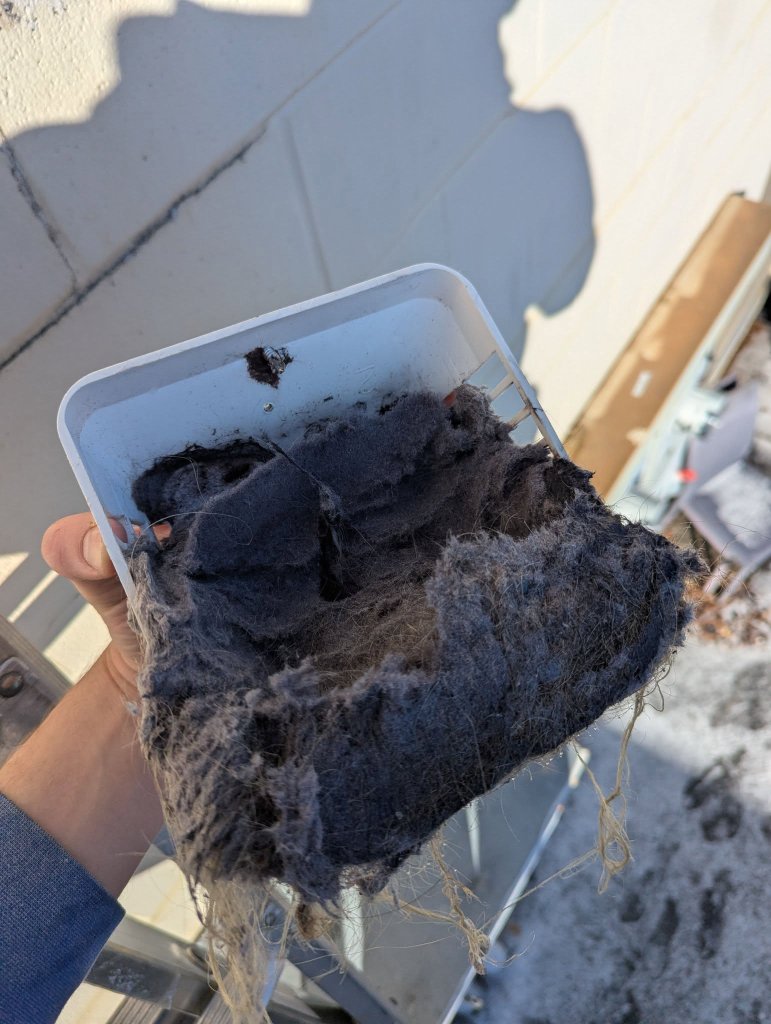
A restricted vent slows the exhaust air down, which gives the warm moisture more time to condense against cold duct walls before it ever exits. So a line that already needs a cleaning produces more water in winter than a clean one does. The water and the packed lint then mix — and that damp lint is both a mold source and a fire load.
The fix
Water in the vent is fixable, and the steps are straightforward:
- 1Have the full vent line cleaned so exhaust moves fast enough to carry moisture out.
- 2Inspect the exterior cap for a missing, broken, or stuck-open flap and replace it with a code-compliant hood.
- 3Run a 4K camera inspection to find any disconnected joint or gap letting cold air in.
- 4If the run passes through a cold attic or crawl space, ask about insulating or re-routing it to stop the condensation at its source.
Water plus lint is a double hazard: it grows mold that makes your dryer smell musty, and it is the same packed lint that ignites when the line overheats. A wet vent in winter is a vent that needs service.
A Fort Wayne seasonal pattern
This problem spikes in the coldest months and disappears as the duct warms up in spring — which is exactly why it gets misdiagnosed as a plumbing leak every winter. If you are mopping behind the dryer only when it is freezing outside, the vent is almost certainly the culprit. See more local resources on cold-season home care in Fort Wayne.
Seeing water behind your dryer this winter? Get a vent inspection.
GET FREE QUOTE →