Home Fire Safety Checklist for Fort Wayne Families
Fire safety isn't one task — it's a set of habits spread across every room in your home. The families who never have a fire aren't lucky; they've quietly built a system of prevention and early warning that runs in the background of daily life. This is the checklist we recommend to every Fort Wayne homeowner, organized room by room, with the one item — dryer vent cleaning — that almost never makes a standard fire-safety list.
The Whole-Home Basics
Before you walk through a single room, make sure the foundation is in place. These four items protect every room at once:
- 1Install smoke alarms in every bedroom, outside each sleeping area, and on every level — including the basement.
- 2Test alarms monthly and replace the batteries at daylight saving time.
- 3Replace any smoke alarm unit older than 10 years (the sensor degrades, not just the battery).
- 4Install carbon monoxide alarms near every sleeping area and on every level with a fuel-burning appliance.
Fort Wayne fact: Indiana fire code requires working smoke detectors in all rental properties and at the top of every stairway. Owner-occupied homes aren't inspected, which means it's entirely on you to verify coverage.
Kitchen
Cooking is the leading cause of home fires nationwide. Most start with unattended food on the stove.
- —Keep a lid or cookie sheet nearby to smother a grease fire — never use water.
- —Maintain a three-foot kid- and pet-free zone around the stove.
- —Keep dish towels, oven mitts, and packaging away from burners.
- —Clean the stovetop and oven regularly; baked-on grease ignites faster than you'd think.
Laundry Room (The One Everyone Forgets)
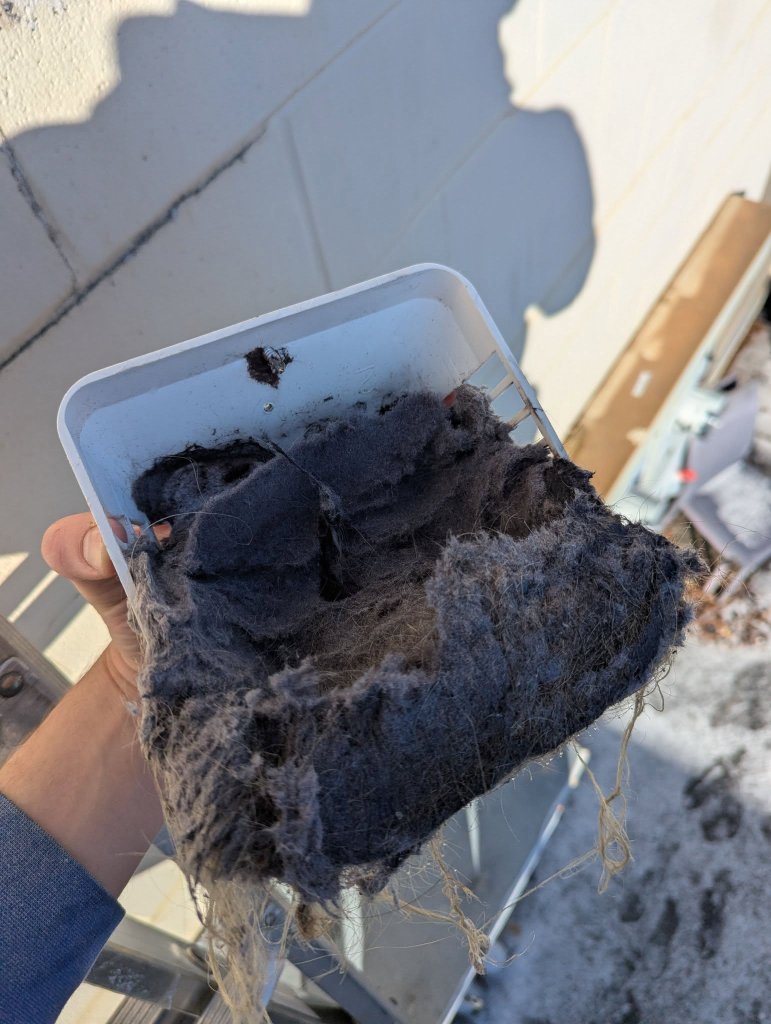
This is where most fire-safety checklists stop — and it's the room that causes the most preventable disaster. The U.S. Fire Administration attributes roughly 2,900 home clothes-dryer fires every year to failure to clean. Lint is the fuel; a blocked vent line is the spark waiting to happen.
- 1Clean the lint screen before every single load — no exceptions.
- 2Have the full vent line professionally cleaned once a year.
- 3Replace any flexible foil or plastic duct with rigid or semi-rigid metal.
- 4Confirm the exterior vent cap is intact, animal-proof, and code-compliant.
- 5Schedule a 4K camera inspection if the line hasn't been visually checked in two or more years.
Warning sign: If clothes take more than one cycle to dry, or the laundry room gets hot and humid during a cycle, your vent line is likely blocked. That's the single most common precursor to a dryer fire.
Living Areas and Bedrooms
- —Never run extension cords under rugs or pinched behind furniture — damaged cords are a leading ignition source.
- —Use surge protectors, not daisy-chained power strips.
- —Keep space heaters at least three feet from anything combustible and unplug them when you leave the room.
- —Blow out candles before leaving a room, or switch to flameless LED alternatives.
Garage and Mechanical Room
Fort Wayne garages double as workshops and storage — which is exactly why they're a fire-risk hotspot. Stored gasoline, paint, and cardboard near a water heater or dryer is a common ignition scenario.
- —Store flammable liquids in approved containers, away from any heat source.
- —Keep the area around the water heater and furnace clear by at least three feet.
- —If your dryer vents into or through the garage, have that line cleaned and inspected — garage runs are often the longest and most lint-heavy.
- —Keep a fire extinguisher (Class ABC) near the door to the home, not buried behind storage.
Practice Your Escape Plan
Detection without a plan only gets you halfway. Every family should have, and practice, a home fire escape plan.
- 1Identify two ways out of every room (usually a door and a window).
- 2Pick a family meeting spot outside, at a safe distance from the home.
- 3Practice the drill twice a year — once in daylight, once after dark.
- 4Teach young children to never hide from firefighters or smoke.
Make Fire Safety a Habit
A one-time pass of this checklist is a great start, but fire safety is a habit, not a project. Test alarms monthly, clean the lint screen every load, and schedule an annual dryer vent cleaning every fall before winter drying spikes. Browse more local resources for Fort Wayne homeowners, or schedule a cleaning to cross the laundry room off your checklist.
Need dryer vent cleaning in Fort Wayne? Get a free quote.
GET FREE QUOTE →